Perimenopause vs Menopause: What Most Women Misunderstand
Perimenopause and menopause are natural transitions, but they are often misunderstood. Perimenopause is the long hormonal shift leading up to menopause, while menopause itself is a single moment defined by twelve months without a period. Most symptoms occur during perimenopause, not menopause, which is why so many women feel confused about what they are experiencing.
-Dr. Dana Cohen

What Women Are Rarely Told About Their Transition from Perimenopause to Menopause
Most women enter their forties with a sense that something is shifting, yet very few understand what is actually happening inside their bodies. I see this every week in my practice. Women arrive feeling confused, frustrated, and often dismissed by the healthcare system. They are told they are "too young" for menopause or that their symptoms are unrelated. In reality, most often they are experiencing perimenopause, a powerful and often misunderstood transition that can begin up to ten years before menopause itself.
Understanding the difference between perimenopause and menopause is essential for reclaiming your health and feeling like yourself again. When you know what is happening hormonally, you can make informed choices and get the support you deserve.
Below is a clear, compassionate, science-based guide written in my voice, designed to help women navigate this stage with confidence.
What Perimenopause Really Is
Perimenopause is the long hormonal transition leading up to menopause. It is not a single moment. It is a phase marked by fluctuating hormones, especially estrogen and progesterone. These fluctuations can create symptoms that feel unpredictable and overwhelming.
Many women are surprised to learn that perimenopause can begin as early as the mid-thirties, although most notice changes in their forties. The ovaries are still functioning, but they are no longer operating at the same rhythm or with the same consistency. This creates a hormonal landscape that rises and falls in ways the body is not used to.
Common symptoms include irregular cycles, heavier or lighter periods, breast tenderness, sleep disturbances, anxiety, irritability, weight changes, and a sudden sensitivity to stress. These symptoms are not imagined. They are not random. They are the result of real hormonal shifts that deserve attention and care.
In my practice, I use advanced hormone testing to help women understand exactly where they are in this transition. When we can see the patterns, we can create a plan that supports the body rather than fighting against it.
What Menopause Actually Means
Menopause is a single point in time. It is defined as twelve consecutive months without a menstrual period. Once you reach that milestone, you are officially in menopause. After that, you enter the postmenopausal phase, where hormone levels remain low and stable. Many women assume menopause is the beginning of symptoms, but in reality, most of the turbulence happens during perimenopause. By the time menopause arrives, many women feel a sense of relief because the hormonal roller coaster has finally slowed down.
Menopause itself is not a disease. It is a natural biological transition. The key is learning how to support your body as it adapts to new hormone levels. This is where personalized care becomes essential.
Why So Many Women Misunderstand These Stages
The biggest misunderstanding is timing. Most women believe menopause begins when their periods stop. In truth, the most intense symptoms often occur years earlier. This leads to misdiagnosis, unnecessary medications, and a sense of confusion that can be emotionally draining.
Another misunderstanding is the belief that symptoms are simply something to endure. Women are often told that mood changes, weight gain, or sleep issues are "normal" or "just stress." While these symptoms are common, you don't need to suffer through them. They are signals that your body needs support.
Functional medicine views perimenopause and menopause as opportunities to rebalance the body. When we address inflammation, nutrient deficiencies, stress patterns, and hormonal shifts, women often feel dramatically better.
How Hormones Shift During These Phases
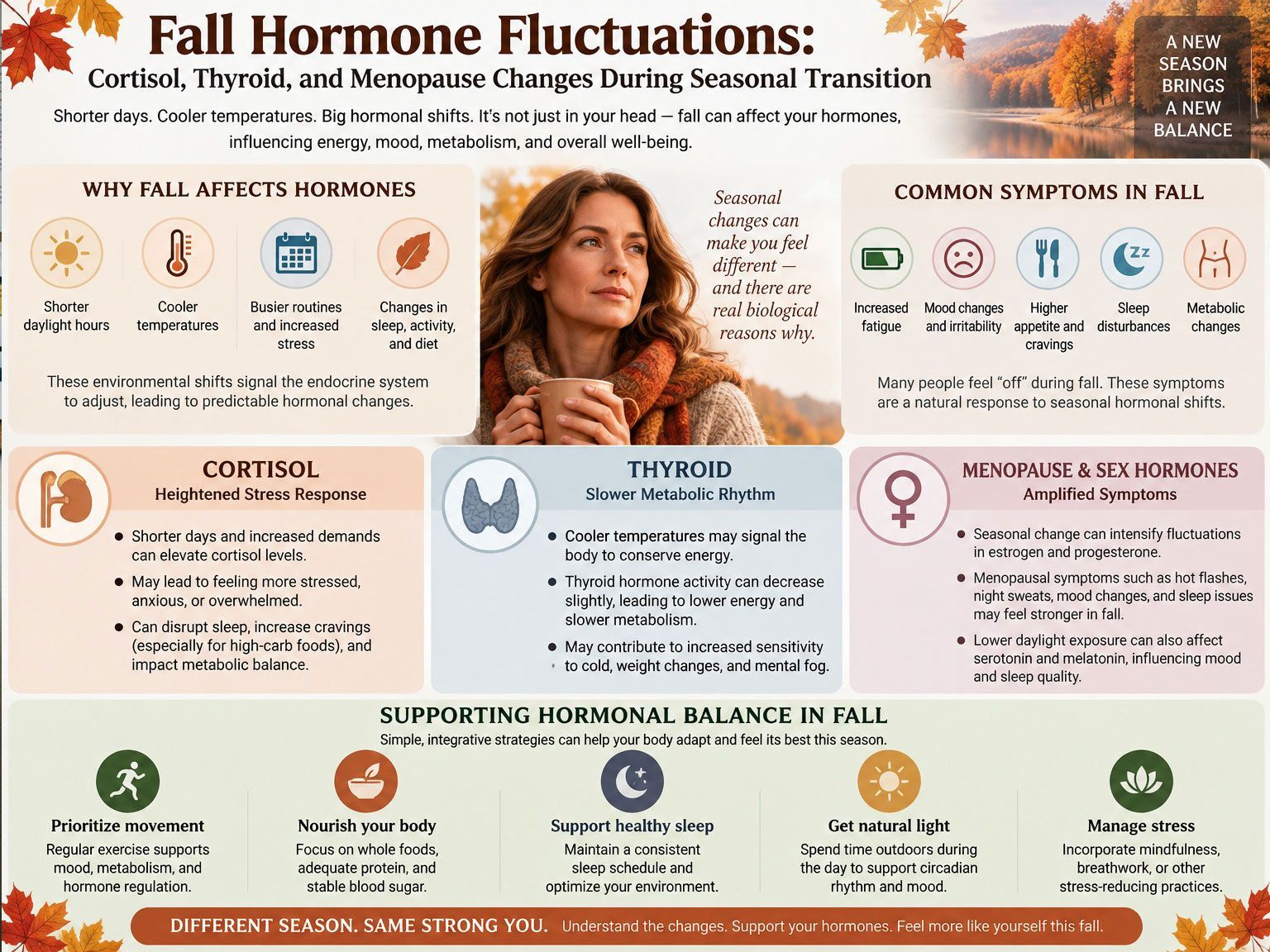
Hormones do not decline in a straight line. They fluctuate. Estrogen may spike one month and plummet the next. Progesterone often declines earlier and more dramatically, which can create a state of estrogen dominance. This imbalance can lead to heavy periods, breast tenderness, irritability, and anxiety.
Cortisol, the stress hormone, also plays a major role. When cortisol is elevated, it disrupts sleep, increases cravings, and makes weight loss more difficult. Thyroid hormones can shift as well, creating fatigue, hair changes, and temperature sensitivity. This is why I rely on comprehensive hormone mapping. When we understand the full picture, we can create a plan that supports the endocrine system rather than guessing.
How Functional Medicine Supports This Transition
Functional medicine looks at the whole body. Instead of treating symptoms in isolation, we identify the root causes of imbalance. This approach is especially powerful during perimenopause and menopause because so many systems are involved. Some of the services I use to support women during this transition include:
- Hormone testing to understand estrogen, progesterone, cortisol, and thyroid patterns
- IV nutrient therapy to replenish vitamins and antioxidants that support energy and mood
- Gut restoration programs to reduce inflammation and improve hormone metabolism
- Detoxification support to help the body process environmental toxins that disrupt hormones
- Personalized nutrition and lifestyle strategies to stabilize blood sugar and improve sleep
- Finally, herbal or even prescription medicines can help alleviate symptoms
When these systems are supported, women often feel more grounded, more energized, and more emotionally balanced.
The Emotional Side of Perimenopause and Menopause
Hormonal transitions affect more than the body. They influence mood, confidence, relationships, and identity. Many women feel a sense of loss or uncertainty during this time. Others feel empowered and ready for a new chapter. Both experiences are valid.
What matters is having support. When women understand what is happening inside their bodies, they feel more in control. When they have a plan, they feel hopeful. When they feel heard, they feel stronger. This is why I believe so deeply in personalized care. Every woman deserves to feel supported during this transition.
How to Know Where You Are in the Transition
If you are experiencing irregular cycles, sleep changes, mood shifts, or new sensitivities to stress, you may be in perimenopause. If you have gone twelve months without a period, you are most likely in menopause. Testing can provide clarity. A comprehensive evaluation can show whether your symptoms are related to hormones, thyroid function, nutrient deficiencies, inflammation, or stress patterns. Once we know the cause, we can create a plan that helps you feel better quickly.
Summary
Perimenopause and menopause are natural transitions, but they are often misunderstood. Perimenopause is the long hormonal shift leading up to menopause, while menopause itself is a single moment defined by twelve months without a period. Most symptoms occur during perimenopause, not menopause, which is why so many women feel confused about what they are experiencing.
With the right support, this transition can become a time of renewal rather than frustration. Through hormone testing, IV nutrient therapy, gut restoration, detoxification support, and personalized lifestyle strategies, it is possible to feel balanced, energized, and deeply connected to your body again.