Cortisol Imbalance Treatments NYC - Dr. Dana Cohen
Understanding and Treating Cortisol Imbalance with Functional and Integrative Medicine in Manhattan NY 10019
I understand how deeply cortisol imbalance can affect your daily life, your energy, and your emotional well‑being. Many of my patients come to me feeling overwhelmed, exhausted, and frustrated that no one has been able to explain why they feel this way. I want you to feel heard, validated, and supported as we uncover the root causes of your symptoms. With complementary, functional, and integrative treatments, I can help you restore balance and reclaim your quality of life.
-Dr. Dana Cohen
What Is Cortisol Imbalance?
Cortisol imbalance refers to a disruption in the normal rhythm and production of cortisol, the body's primary stress hormone. The adrenal glands produce cortisol and plays a vital role in regulating metabolism, immune function, inflammation, and the stress response.

Sign-up today and receive ta FREE Dry Brushing Guide written by Dr. Dana Cohen
When cortisol levels are consistently too high or too low, the body can no longer maintain healthy physiological balance. This imbalance can develop gradually over time due to chronic stress, illness, lifestyle factors, or underlying medical conditions. Cortisol imbalance affects multiple systems in the body, leading to wide‑ranging, often confusing symptoms. Many patients experience both physical and emotional symptoms that worsen without proper treatment. Understanding cortisol imbalance is essential because it is often the hidden cause behind fatigue, sleep issues, weight changes, and mood disturbances.
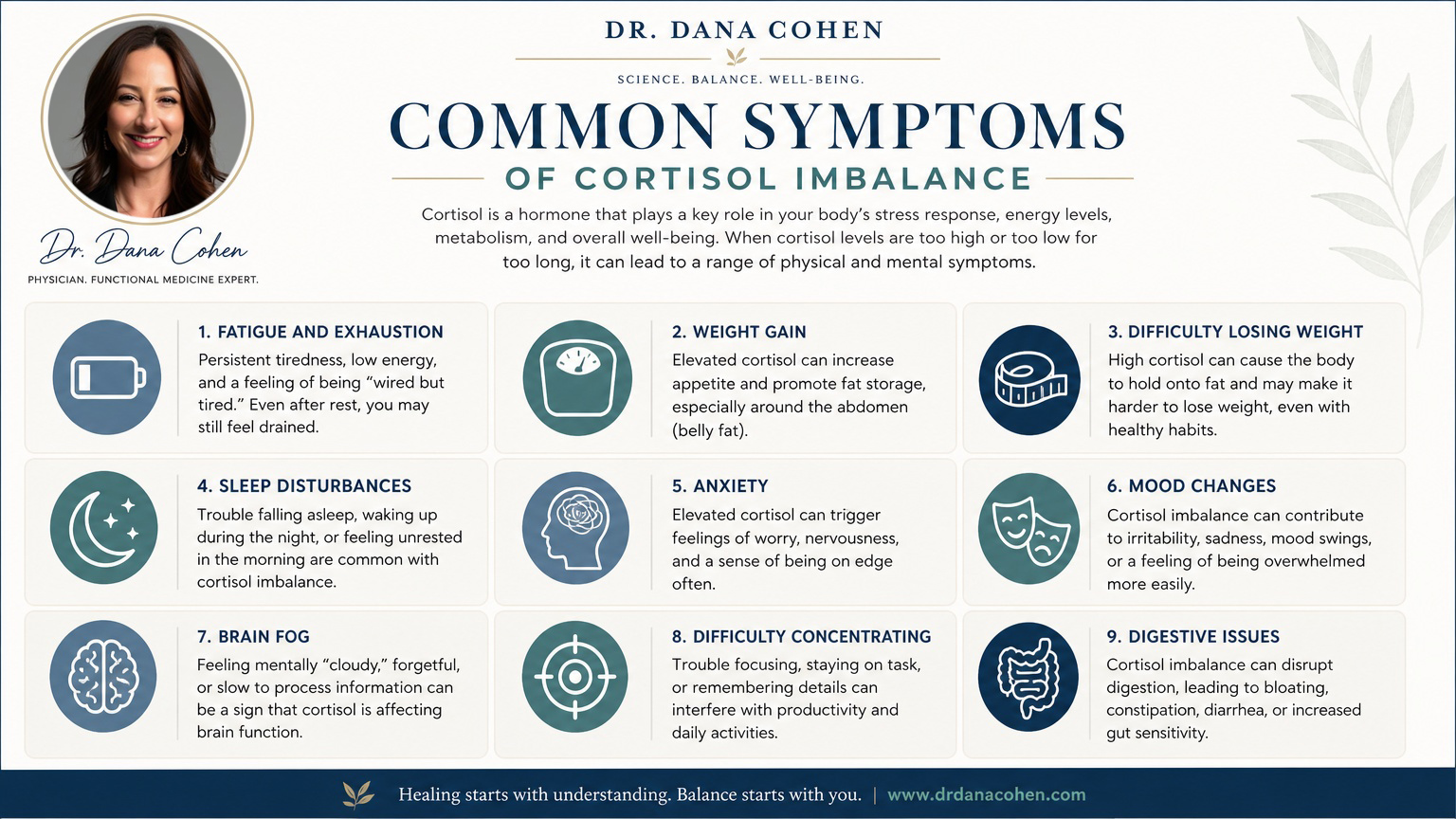
Common Symptoms of a Cortisol Imbalance
Cortisol imbalance can present in many ways, and symptoms often overlap with other conditions, making diagnosis challenging. Patients may experience symptoms that fluctuate throughout the day or worsen during stressful periods. Recognizing these signs early can help prevent long‑term complications.
- Fatigue and Exhaustion: Fatigue is one of the most common symptoms of cortisol imbalance, often described as feeling "tired but wired." Patients may struggle to get out of bed, feel drained throughout the day, or experience sudden energy crashes. This exhaustion persists even with adequate sleep and rest.
- Weight Gain or Difficulty Losing Weight: Cortisol affects metabolism and fat storage, especially around the abdomen. When levels are high, the body may hold onto fat as a protective response to stress. Patients often report unexplained weight gain or resistance to weight loss despite healthy habits.
- Sleep Disturbances: Cortisol should naturally decrease at night, but imbalance can disrupt this rhythm. Patients may experience insomnia, restless sleep, or frequent nighttime wakings. Poor sleep further worsens cortisol dysregulation. Learn more about sleep disorders.
- Anxiety or Mood Changes: Cortisol directly influences the nervous system, and imbalance can heighten anxiety, irritability, or emotional sensitivity. Patients may feel overwhelmed by minor stressors or experience sudden mood swings.
- Brain Fog and Difficulty Concentrating: Cognitive symptoms such as forgetfulness, mental fatigue, and trouble focusing are common. These issues often interfere with work performance, decision‑making, and daily tasks.
- Digestive Issues: Cortisol affects gut motility and inflammation, leading to bloating, constipation, diarrhea, or abdominal discomfort. Many patients notice digestive symptoms worsen during stressful periods.
These symptoms can significantly impact daily functioning and overall well‑being. When cortisol imbalance is addressed properly, patients often experience dramatic improvements in energy, mood, sleep, and physical health.
Types of Cortisol Imbalances
Cortisol imbalance can occur in several forms; each one can affect the body differently.
- Some patients experience chronically elevated cortisol, (Cushing's Syndrome) often due to prolonged stress or underlying inflammation.
- Others may have consistently low cortisol, (Adrenal Insufficiency) which can develop after years of adrenal overactivation.
- Some individuals experience a flattened cortisol curve, where levels fail to rise and fall appropriately throughout the day.
- Another type involves a reversed cortisol rhythm, where cortisol is low in the morning and high at night.
Patients may also experience episodic cortisol spikes triggered by emotional or physical stress.
Hormonal fluctuations, such as those related to menopause or thyroid dysfunction, can also contribute to cortisol irregularities. Understanding the specific type of imbalance is essential for creating an effective treatment plan tailored to each patient's needs.
Common Causes of Cortisol Imbalances
Cortisol imbalance often develops from chronic stress, which forces the adrenal glands to produce cortisol continuously. Poor sleep habits, irregular schedules, or nighttime screen exposure can disrupt the natural cortisol rhythm. Nutritional deficiencies, especially low magnesium or B vitamins, can impair adrenal function.
Inflammatory conditions, infections, or autoimmune disorders may also contribute to cortisol dysregulation. Hormonal imbalances, including thyroid disorders or estrogen fluctuations, can interfere with cortisol production.
Overuse of stimulants such as caffeine can strain the adrenal glands and worsen symptoms. Emotional trauma or prolonged psychological stress is another major contributor. Environmental toxins, including mold exposure, can also disrupt cortisol regulation.
Related Conditions to Cortisol Imbalances That Dr. Dana Cohen Can Treat
Cortisol imbalance often overlaps with other conditions that affect energy, mood, and metabolic health. Many patients come to me with multiple symptoms that seem unrelated but share a common root cause. Addressing cortisol imbalance can significantly improve these related conditions.
- Adrenal Fatigue: Adrenal fatigue occurs when the adrenal glands become overworked and can no longer produce adequate cortisol. Patients may experience severe fatigue, dizziness, and difficulty handling stress. Treating cortisol imbalance helps restore adrenal resilience.
- Thyroid Dysfunction: Cortisol and thyroid hormones are closely connected, and imbalance in one often affects the other. Patients may experience weight changes, temperature sensitivity, and sluggish metabolism. Supporting cortisol balance can improve thyroid function and overall hormonal harmony.
- Chronic Fatigue Syndrome: Many patients with chronic fatigue syndrome have underlying abnormalities in cortisol regulation. Symptoms include profound exhaustion, muscle pain, and cognitive difficulties. Functional medicine approaches can help restore energy and reduce inflammation.
- Insomnia and Sleep Disorders: Cortisol imbalance disrupts the sleep‑wake cycle, making restful sleep difficult. Patients may struggle to fall asleep or stay asleep. Correcting cortisol rhythm often leads to significant improvements in sleep quality.
Treating these related conditions through integrative medicine helps patients regain energy, mental clarity, and emotional stability. When cortisol is balanced, the body can finally begin to heal.

Candidates for Treatment by Dr. Dana Cohen
Patients who experience chronic fatigue, unexplained weight changes, or persistent stress may benefit from treatment for cortisol imbalance. Individuals with sleep disturbances, anxiety, or mood fluctuations are also strong candidates. Those who have tried conventional treatments without improvement often find relief through integrative approaches.
Patients with digestive issues, inflammation, or autoimmune symptoms may also have underlying cortisol dysregulation.
Anyone experiencing burnout or prolonged emotional stress may benefit from adrenal support. Individuals with hormonal imbalances or thyroid issues often require cortisol evaluation. Patients seeking natural, root‑cause solutions are ideal candidates. Ultimately, anyone who feels "off" without a clear explanation may benefit from a cortisol assessment.
How Conventional Medicine Treats It
Conventional medicine typically focuses on symptom management rather than identifying the root cause of cortisol imbalance. Treatment may involve medications for anxiety, sleep, or inflammation. Blood tests may be performed, but cortisol rhythm is often overlooked. Patients may be advised to reduce stress, but not receive actionable guidance.
While conventional approaches can provide temporary relief, they rarely address underlying adrenal dysfunction. Many patients continue to struggle with symptoms despite normal lab results. This is why integrative evaluation is essential for long‑term healing.
How Dr. Dana Cohen Treats It with Functional and Integrative Medicine
My approach begins with a comprehensive evaluation of your symptoms, lifestyle, and medical history. I use advanced testing to assess cortisol rhythm throughout the day, not just a single snapshot. Treatment focuses on restoring balance through nutrition, targeted supplementation, and stress‑supportive therapies. I incorporate adaptogenic herbs, hydration strategies, and anti‑inflammatory protocols.
Personalized sleep optimization plans help reset cortisol rhythm. Detoxification support may be recommended if environmental toxins are contributing to symptoms. I also address emotional stress through mind‑body practices and nervous system regulation. My goal is to help you feel energized, calm, and resilient again.
Possible Side Effects of Treatment
Most integrative treatments for cortisol imbalance are gentle and well‑tolerated. Some patients may experience temporary fatigue as their bodies adjust to new rhythms. Herbal supplements may cause mild digestive changes in sensitive individuals. Detoxification protocols can occasionally trigger headaches or temporary discomfort. Adjustments in sleep patterns may take time to stabilize. Overall, side effects are minimal compared to the benefits of restoring hormonal balance.

What Can Happen if Cortisol Imbalance Is Left Untreated?
Untreated cortisol imbalance can lead to chronic fatigue, burnout, and worsening stress intolerance. Over time, it may contribute to weight gain, insulin resistance, and metabolic dysfunction. Sleep disturbances can become more severe, affecting cognitive performance and emotional stability.
Persistent high cortisol can weaken the immune system and increase inflammation. Low cortisol may impair the body's ability to respond to stress or illness. Hormonal imbalances may worsen, affecting thyroid and reproductive health. Digestive issues may become chronic and more difficult to treat. Ultimately, untreated cortisol imbalance can significantly reduce quality of life.
Why Patients Choose Dr. Dana Cohen
Patients choose me because I take the time to listen deeply and understand the full picture of their health. My integrative approach goes beyond symptom management to uncover root causes. I use advanced testing and personalized treatment plans tailored to each patient's unique needs. My methods combine evidence‑based functional medicine with traditional healing practices.
Patients appreciate my compassionate, patient‑centered care. Many come to me after years of frustration with conventional approaches. I prioritize education, empowerment, and long‑term wellness. My goal is to help every patient feel vibrant, balanced, and resilient.
Cortisol Imbalance FAQs
- Can cortisol imbalance affect my sensitivity to temperature changes? - Yes, cortisol plays a role in regulating the autonomic nervous system, which influences how your body responds to heat and cold. When cortisol is dysregulated, many patients report feeling unusually hot, cold, or unable to tolerate temperature shifts.
- Why do I crave salty foods when my cortisol is off? - Salt cravings often occur because cortisol influences sodium balance and fluid regulation. When cortisol is low or unstable, the body may signal a need for sodium to support blood pressure and adrenal function.
- Can cortisol imbalance change how my body reacts to exercise? - Absolutely, cortisol affects energy production, muscle recovery, and inflammation. When levels are too high or too low, exercise may feel harder, recovery may slow, and workouts may trigger unusual fatigue or irritability.
- Does cortisol imbalance impact how often I get sick? - Yes, cortisol helps regulate immune activity, and imbalance can weaken immune defenses or create exaggerated inflammatory responses. Many patients notice they catch colds more easily or take longer to recover when cortisol is dysregulated.
- Can cortisol imbalance cause changes in my skin, such as dryness or breakouts? - Cortisol directly affects oil production, inflammation, and skin barrier function. Imbalance can lead to dryness, acne flare‑ups, or increased sensitivity, especially during periods of stress.

Contact Dr. Dana Cohen for Your Personalized Cortisol Imbalance Treatment in Manhattan, NYC
Cortisol imbalance can affect every aspect of your life, from energy and mood to sleep and metabolism. When addressed properly, patients often experience profound improvements in their overall well‑being.
Functional and integrative medicine offers a comprehensive, root‑cause approach to healing. I am committed to helping you understand your symptoms and restore balance naturally.
With personalized care, you can regain your vitality and emotional stability. You deserve to feel healthy, strong, and supported. If you suspect cortisol imbalance is affecting your life, I encourage you to take the next step. Contact my office today to schedule a consultation and begin your healing journey.
Please contact Dr. Cohen today!
Additional References
- Cortisol level dysregulation and its prevalence—Is it nature's alarm clock? - National Library of Medicine