Fall Allergies, Mold, and Sinus Inflammation
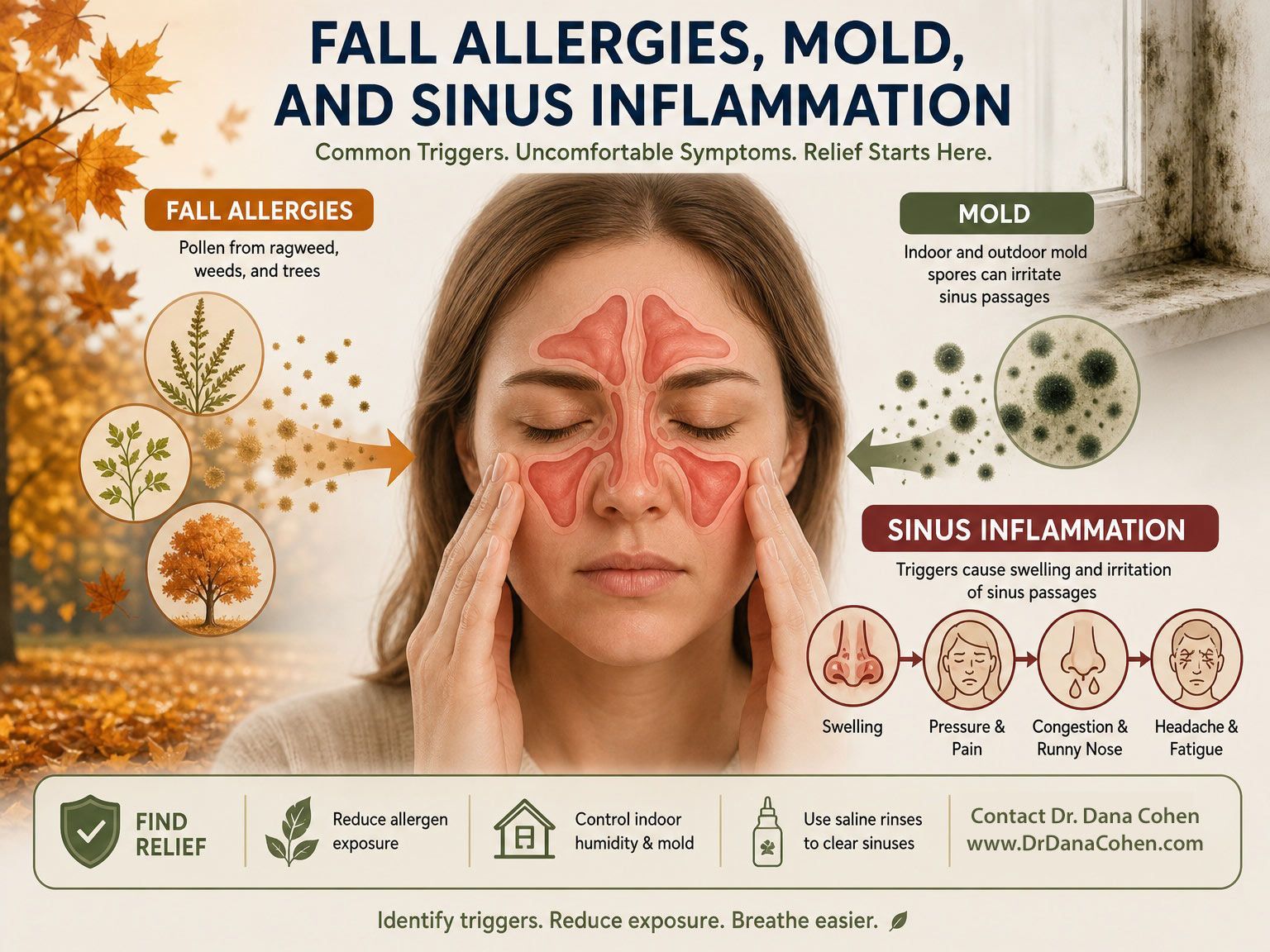
Primary Fall Triggers That Inflame the Sinuses Are Treatable and Preventable
The fall season brings a unique combination of environmental changes that significantly impact sinus health, respiratory comfort, and overall inflammation. While many people associate allergies with spring, fall is often just as disruptive—sometimes even more so. As leaves decay, mold proliferates, temperatures shift, and indoor environments close up, the respiratory system faces a surge of irritants.
Patients often report sinus pressure, headaches, congestion, fatigue, and a sudden, general sense of inflammation as the season changes. These symptoms are not random; they are tied to predictable environmental triggers that intensify from September through November. Understanding how fall affects the sinuses enables targeted, integrative strategies to reduce inflammation and restore comfort.
One of the most overlooked contributors to fall sinus issues is mold exposure. Mold spores increase dramatically as leaves fall and moisture accumulates. Even individuals who do not consider themselves “allergic” to mold often experience inflammation when exposed to high spore counts.
Mold is a potent immune trigger, activating inflammatory pathways that affect not only the sinuses but also energy, cognition, and overall well-being. Indoor mold exposure also rises in fall as windows close and ventilation decreases. This combination of outdoor and indoor mold creates a sustained inflammatory load that can persist for months if not addressed. When mold exposure is chronic or severe, it can contribute to systemic symptoms such as fatigue, brain fog, and immune dysregulation.
Another major factor is the shift in indoor air quality. As temperatures drop, people spend more time indoors, often in poorly ventilated environments. Heating systems stir up dust, dander, and particulates that have settled over the summer. These irritants can inflame the sinuses and trigger immune responses that mimic allergies.
Indoor humidity also decreases, drying out nasal passages and making them more susceptible to irritation. Dry mucous membranes trap fewer allergens and pathogens, increasing the risk of inflammation and infection. This combination of dryness, particulates, and mold creates a perfect storm for sinus discomfort.
Primary Fall Triggers That Inflame the Sinuses
Fall introduces several environmental changes that directly affect respiratory and sinus health. These triggers often overlap, creating a cumulative inflammatory burden that intensifies symptoms. Identifying these factors helps determine which interventions will be most effective for relief.
- Leaf Mold and Outdoor Spores — As leaves decay, mold proliferates rapidly and releases spores into the air. These spores are easily inhaled and can trigger inflammation even in people without classic mold allergies. Outdoor mold exposure peaks in fall, making it a major contributor to sinus pressure and congestion.
- Indoor Air Quality Shifts — Closed windows reduce ventilation, allowing dust, dander, and particulates to accumulate. Heating systems circulate these irritants throughout the home, increasing respiratory exposure. Poor indoor air quality is one of the most common yet overlooked causes of fall sinus inflammation.
- Humidity Drops and Dry Sinuses — Cooler weather and indoor heating reduce humidity, drying out nasal passages. Dry mucous membranes are more reactive and less effective at filtering irritants. This dryness increases susceptibility to inflammation, congestion, and infection.
- Environmental Toxins and Pollutants — Fall brings increased exposure to environmental toxins such as VOCs from indoor materials and pollutants from outdoor debris. These toxins can irritate the respiratory system and activate immune pathways that contribute to sinus discomfort.
How Mold Exposure Impacts the Entire Body
Mold is not just a respiratory irritant; it is a systemic inflammatory trigger. When mold spores enter the body, they activate immune pathways that can affect multiple systems. Some individuals experience classic allergy symptoms such as sneezing, congestion, and watery eyes, but many have subtler signs, including fatigue, headaches, brain fog, and difficulty concentrating.
Mold exposure can also disrupt sleep, increase inflammation, and weaken immune resilience. With chronic exposure, mold can contribute to long‑term inflammatory conditions that affect energy, cognition, and hormonal balance.
The challenge with mold is that it often goes undetected. Outdoor mold exposure is seasonal, but indoor mold can persist year‑round, especially in bathrooms, basements, kitchens, and poorly ventilated areas. Even small amounts of mold can trigger symptoms in sensitive individuals. Because mold exposure is cumulative, fall often becomes the tipping point where symptoms become noticeable. Identifying mold exposure early enables targeted interventions to reduce inflammation and restore respiratory comfort.
This is where the Total Tox Burden Test becomes essential. This test identifies mold toxins and other environmental toxins that may be contributing to inflammation. By understanding the specific toxins affecting the body, you can tailor treatment to reduce exposure and support detoxification. This approach is far more effective than guessing or treating symptoms alone. When you identify and address mold toxins, patients often experience significant improvements in sinus comfort, energy, and overall well-being.
Integrative Strategies to Reduce Fall Sinus Inflammation
Effective fall sinus support requires a combination of environmental adjustments, detoxification strategies, and anti‑inflammatory support. These interventions work together to reduce triggers, strengthen the respiratory system, and calm inflammation. The following strategies represent the most effective clinical approaches for fall sinus health.
- Total Tox Burden Test for Mold and Environmental Toxin Identification — This test provides a detailed analysis of mold toxins and environmental pollutants affecting the body. Identifying these toxins enables targeted detoxification and reduced exposure. Patients often experience significant improvements in sinus comfort and energy once they address mold toxins.
- Whole-Food Supplements for Anti-Inflammatory Support - Whole-food formulations can help support a healthy inflammatory response and immune resilience. Nutrients such as antioxidants, essential fatty acids, and herbal compounds may help soothe sinus irritation and support healthy mucous membranes. Natural D-Hist from Ortho Molecular Products is one example of a supplement you may incorporate into an individualized seasonal wellness plan.
- Daily Nasal and Sinus Hygiene - A gentle daily saline rinse can help remove airborne irritants and keep nasal passages moist. Use only distilled, sterile, or previously boiled and cooled water, and clean the rinsing device after each use.
- Environmental Adjustments to Reduce Exposure — Improving ventilation, using air purifiers, and maintaining optimal indoor humidity can significantly reduce sinus irritation. Regularly clean heating systems and reduce indoor dust to minimize triggers. These adjustments create a healthier indoor environment that supports respiratory well-being.
Strengthening the Sinuses Through Seasonal Support
Beyond reducing exposure, strengthening the sinuses themselves is essential for long‑term comfort. Hydration plays a major role in keeping mucous membranes healthy. Drinking adequate water and using humidifiers help keep nasal passages moist and resilient. Nasal rinses with saline can remove irritants and reduce inflammation, especially during high‑mold days. Gentle steam inhalation can also soothe irritated sinuses and improve airflow.
Anti‑inflammatory foods support sinus health from within. Fall produce such as apples, squash, and root vegetables provide antioxidants that reduce inflammation. Omega‑rich foods such as salmon and walnuts help strengthen mucous membranes and support immune function. Herbal teas containing ginger, turmeric, or nettle can further reduce inflammation and support respiratory comfort.
Breathing practices also play a role. Slow, controlled breathing reduces stress and supports sinus drainage. Reducing stress matters because chronic stress increases inflammation and weakens immune resilience. When you manage stress, your body can handle environmental triggers without excessive inflammation.
The Bottom Line: Fall Sinus Issues Are Treatable and Preventable
Fall allergies, mold exposure, and sinus inflammation are common, but they do not need to disrupt the season. By identifying environmental triggers, supporting detoxification, strengthening mucous membranes, and reducing inflammation, you can restore sinus comfort quickly and effectively.
The most powerful clinical combination includes the Total Tox Burden Test for mold and toxin identification and Standard
Process Whole Food Supplements for anti‑inflammatory support. When these modalities are integrated, patients experience clearer breathing, reduced congestion, improved energy, and greater overall well-being throughout the fall season.