Fall Hormone Fluctuations: Cortisol, Thyroid, and Menopause Changes During Seasonal Transition
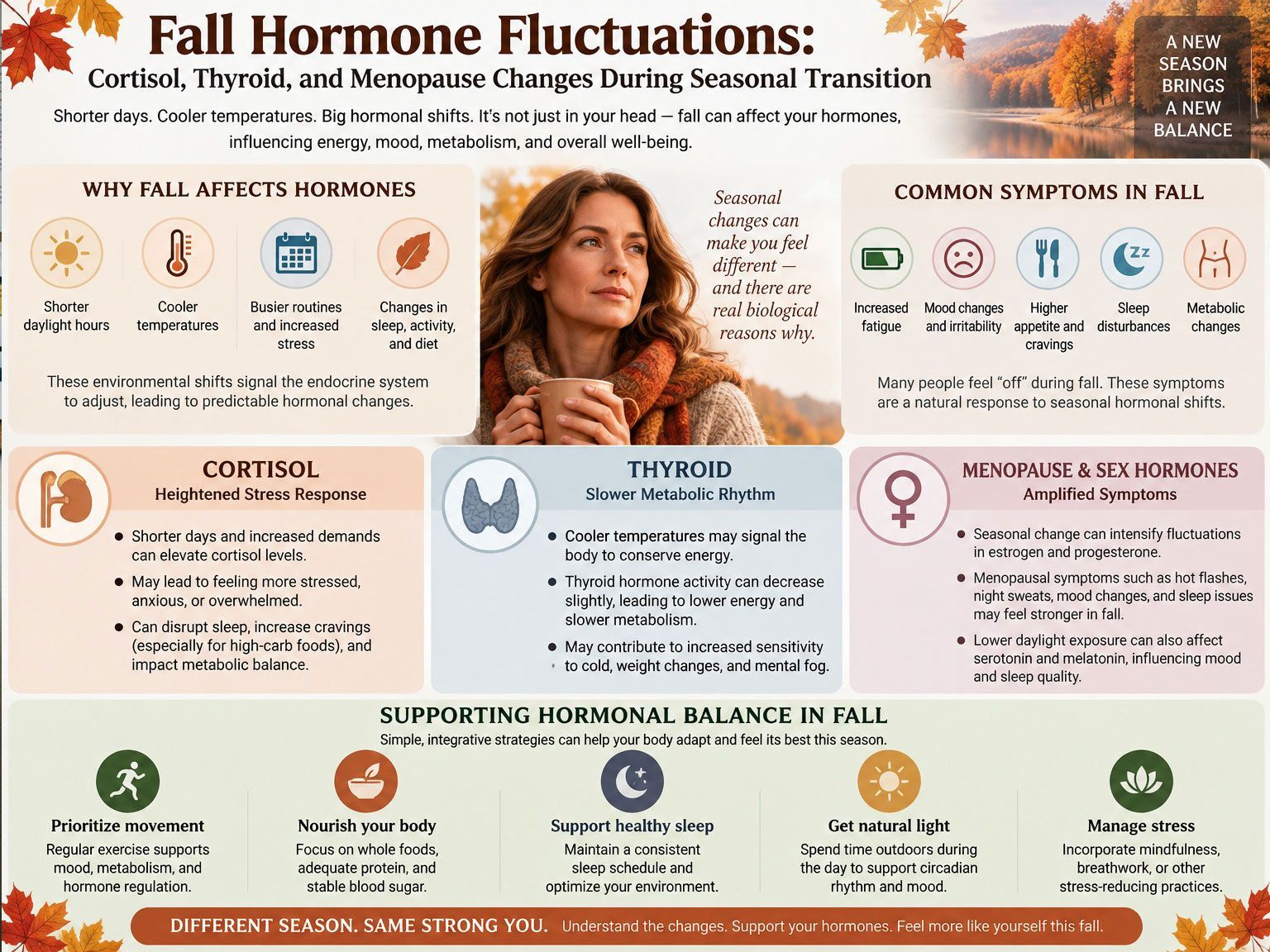
Why the Fall Shift Disrupts Your Hormones: The Interconnected Effects of Seasonal Hormonal Changes
The fall season brings a distinct shift in hormonal patterns that many people feel long before they understand what is happening. As daylight shortens, temperatures cool, and routines intensify, the endocrine system begins adjusting to new environmental demands. These adjustments are subtle at first, but they accumulate quickly, creating noticeable changes in energy, mood, appetite, sleep, and metabolic stability.
Patients often describe fall as a season where they feel “off,” even if they cannot pinpoint a specific symptom. This sense of imbalance is not imagined; it is a predictable physiological response to seasonal change. Fall affects cortisol, thyroid hormones, and sex hormones, which can amplify fatigue, cravings, irritability, and menopausal symptoms. Understanding these shifts enables targeted, integrative strategies to stabilize hormones and restore balance.
Cortisol is one of the first hormones affected by fall. As daylight decreases, the body’s internal clock shifts, altering the timing and production of cortisol. Cortisol normally peaks in the morning to support alertness and gradually declines throughout the day. In the fall, this rhythm often becomes blunted or delayed, leading to morning grogginess and afternoon irritability. These changes can also affect blood sugar stability, appetite, and stress resilience.
Thyroid hormones are similarly sensitive to seasonal change. Cooler temperatures increase metabolic demand, requiring more efficient thyroid function. Individuals with borderline thyroid issues often feel more symptomatic in fall, experiencing fatigue, cold intolerance, weight fluctuations, and slowed cognition. Menopause symptoms can also intensify during fall due to the combined effects of circadian disruption, cortisol imbalance, and environmental stressors.
The endocrine system is interconnected, meaning that changes in one hormone often affect others. When cortisol becomes unstable, thyroid function may become less efficient. When thyroid hormones fluctuate, menopausal symptoms may intensify. When sex hormones shift, metabolic stability may weaken. Fall triggers a cascade of hormonal adjustments that can feel overwhelming if not properly supported. Fortunately, integrative strategies can stabilize these patterns and help the body adapt smoothly to seasonal change.
Primary Hormonal Shifts That Occur During Fall
Fall introduces several predictable hormonal changes that influence energy, metabolism, and mood. These shifts often overlap, creating a cumulative effect that intensifies symptoms. Understanding these patterns helps determine which interventions will be most effective for restoring balance.
- Cortisol Rhythm Disruption — Shorter daylight hours shift cortisol timing, often delaying the morning peak. This creates grogginess, reduced motivation, and increased afternoon irritability. Cortisol instability also affects appetite, cravings, and blood sugar regulation.
- Thyroid Stress from Cooler Temperatures — As the body works harder to maintain core warmth, thyroid demand increases. Individuals with borderline thyroid function may experience fatigue, cold intolerance, and slowed cognition. These symptoms often intensify as temperatures continue to drop.
- Menopause Symptom Amplification — Fall’s circadian changes and cortisol fluctuations can worsen hot flashes, sleep disturbances, and mood swings. Many women report increased irritability and fatigue during seasonal transition. These symptoms often improve when hormonal balance is supported.
- Metabolic Shifts Affecting Appetite and Weight — Earlier darkness and cooler weather influence appetite hormones, increasing cravings and reducing metabolic efficiency. These changes can lead to weight fluctuations and reduced energy. Stabilizing metabolism helps counteract these seasonal effects.
How Cortisol Responds to Seasonal Change
Cortisol is highly sensitive to light exposure, making fall one of the most disruptive seasons for cortisol rhythm. As daylight decreases, the body begins producing melatonin earlier in the evening, which in turn shifts cortisol timing. This often results in a delayed morning cortisol peak, creating grogginess that persists for hours. Individuals may feel as though they are “starting the day in slow motion,” even with adequate sleep. Afternoon cortisol may also rise slightly, contributing to irritability, cravings, and difficulty winding down at night.
Cortisol instability affects more than energy. It influences blood sugar regulation, appetite, stress resilience, and sleep quality. When cortisol becomes unpredictable, individuals may experience increased cravings for carbohydrates or sugar, especially in the late afternoon. These cravings are not simply behavioral; they are hormonally driven. Cortisol also affects sleep by influencing melatonin timing. When cortisol rises too late in the day, falling asleep becomes more difficult, creating a cycle of fatigue that intensifies over time.
Supporting cortisol during fall requires stabilizing circadian rhythm, reducing stress, and replenishing nutrients that support adrenal function. Morning sunlight exposure, consistent sleep timing, and reduced evening stimulation help regulate cortisol naturally. Nutrients such as magnesium and B‑vitamins support adrenal resilience and improve energy stability. When cortisol is supported properly, individuals experience more consistent energy, fewer cravings, and improved mood throughout the season.
Integrative Strategies to Stabilize Hormones During Fall
Effective fall hormone support requires a combination of metabolic stabilization, endocrine balancing, and nutrient replenishment. These strategies work together to regulate cortisol, support thyroid function, and reduce menopausal symptoms. The following interventions represent the most effective clinical approaches for fall hormonal health.
- Bioidentical Hormone Replacement Therapy for Endocrine Balance — BHRT helps stabilize sex hormones that fluctuate during seasonal change. This therapy can reduce hot flashes, improve sleep, and support mood stability. Patients often experience significant improvements in energy and well-being when hormonal balance is restored.
- Prescription GLP‑1 Therapy for Metabolic Regulation — Fall often brings increased cravings, appetite fluctuations, and blood sugar instability due to hormonal shifts and earlier darkness. Prescription GLP‑1 therapy helps regulate appetite, increase satiety, and stabilize blood sugar levels, reducing afternoon crashes and supporting weight stability. This therapy is particularly effective for individuals whose fatigue is tied to metabolic dysregulation.
- Whole-Food Nutritional Support for Hormonal Resilience - Targeted nutritional support can help provide the building blocks needed for healthy adrenal, thyroid, and metabolic function during seasonal transitions. Key nutrients such as magnesium, B vitamins, essential fatty acids, antioxidants, and trace minerals help support hormone production, stress resilience, and steady energy levels. When combined with a nutrient-dense diet and individualized care, these supplements can help promote hormonal balance and overall well-being throughout the fall season.
How Thyroid Function Responds to Cooler Weather
Thyroid hormones play a major role in regulating metabolism, body temperature, and energy expenditure. As temperatures cool, the body requires more efficient thyroid function to maintain warmth and metabolic stability. Individuals with borderline thyroid issues often feel more symptomatic in fall, experiencing fatigue, cold intolerance, weight fluctuations, and slowed cognition. These symptoms may appear suddenly as temperatures drop, even if thyroid function was stable during summer.
Thyroid hormones are also influenced by cortisol. When cortisol becomes unstable, thyroid conversion may become less efficient, reducing the availability of active thyroid hormone. This can create a cycle where fatigue intensifies, metabolism slows, and cognitive clarity decreases. Supporting thyroid function during fall requires stabilizing cortisol, replenishing nutrients, and reducing inflammation. When thyroid hormones are supported properly, individuals experience improved energy, better temperature regulation, and more stable metabolism.
The Bottom Line: Fall Hormonal Shifts Are Real — and Highly Treatable
Fall triggers predictable hormonal changes that affect cortisol levels, thyroid function, and menopausal symptoms. These shifts can feel overwhelming, but they respond well to integrative support. By stabilizing metabolism, replenishing nutrients, supporting endocrine balance, and regulating circadian rhythm, hormonal stability can be restored quickly and effectively.
The most powerful clinical combination includes Bioidentical Hormone Replacement Therapy, Prescription GLP1 Therapy, and targeted whole-food nutritional support. When these modalities are integrated, patients experience improved energy, reduced cravings, better sleep, and greater overall hormonal resilience throughout the fall season.